On December5, 2025, the87th Zhi Xin Forumwas held in Lecture Hall117atthe Zhi Xin Building, which was jointly organized by the College of Electronic and Information Engineering and Shanghai Institute of Intelligent Science and Technologyof Tongji University. The lecture invitedProf.Haris GacaninfromRWTH Aachen University in Germanyto deliver a speech on “Challenges in Decarbonisation of Road Freight”.
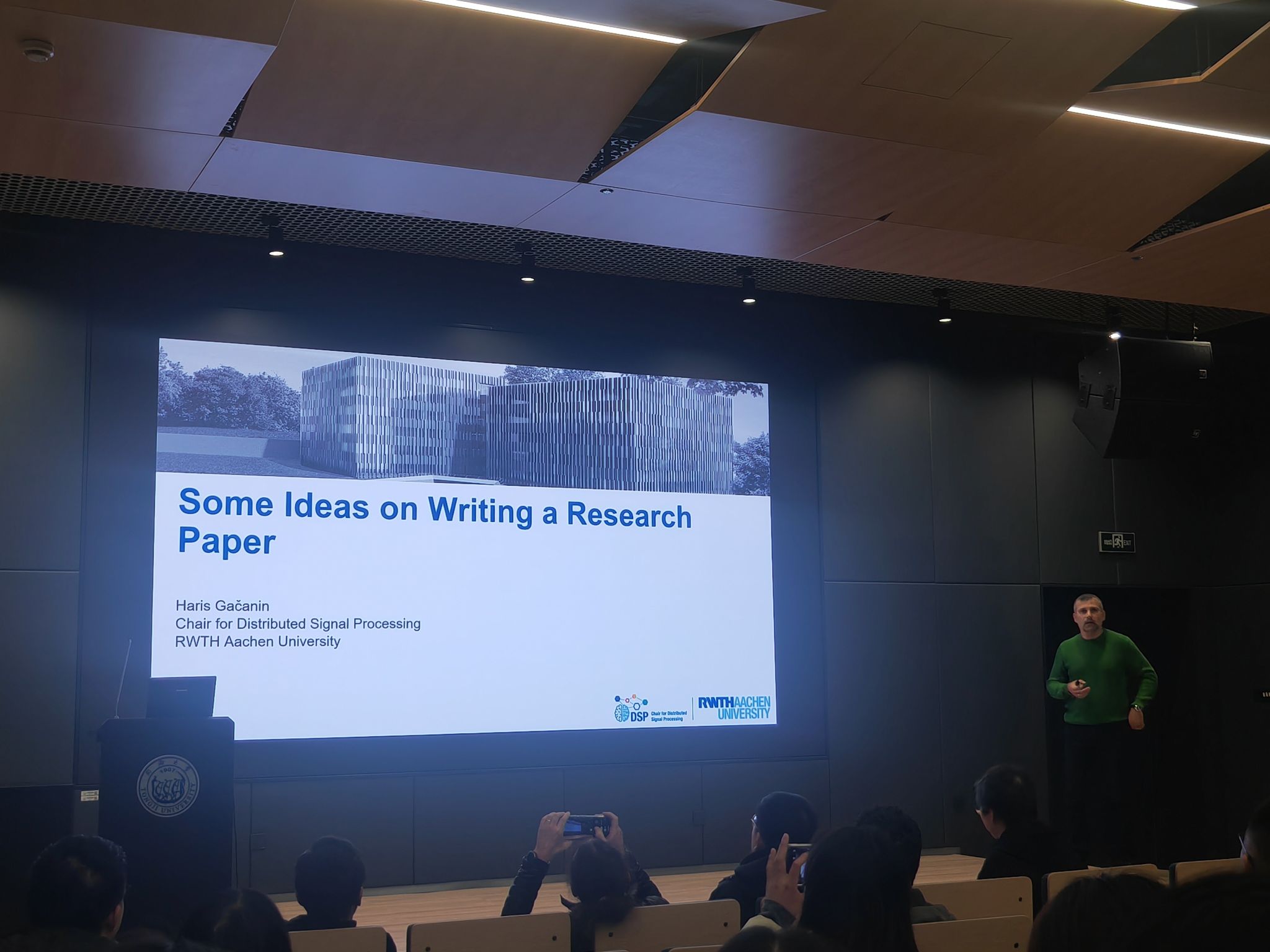
First, Professor Haris Gacanin specified that the core audience of this report were early-career researchers and graduate students, emphasizing that the report would focus on practical guidelines and break down the entire process of academic paper writing by combining research practice cases. He opened his speech by pointing out that the core goal of an academic paper is to clearly and persuasively convey new scientific research knowledge. The prerequisite for achieving this goal is to fully clarify the target journal positioning, the needs of target audiences, and the general writing norms in the academic field before starting to write. Only by anchoring the writing direction can we avoid the problems that the paper does not match the journal’s tone and its core value cannot be highlighted. He also added that a standardized paper structure is essentially an external manifestation of a rigorous research process, so it is necessary to conduct clear sorting out of problem definition and achievement contributions from the early stage of research.
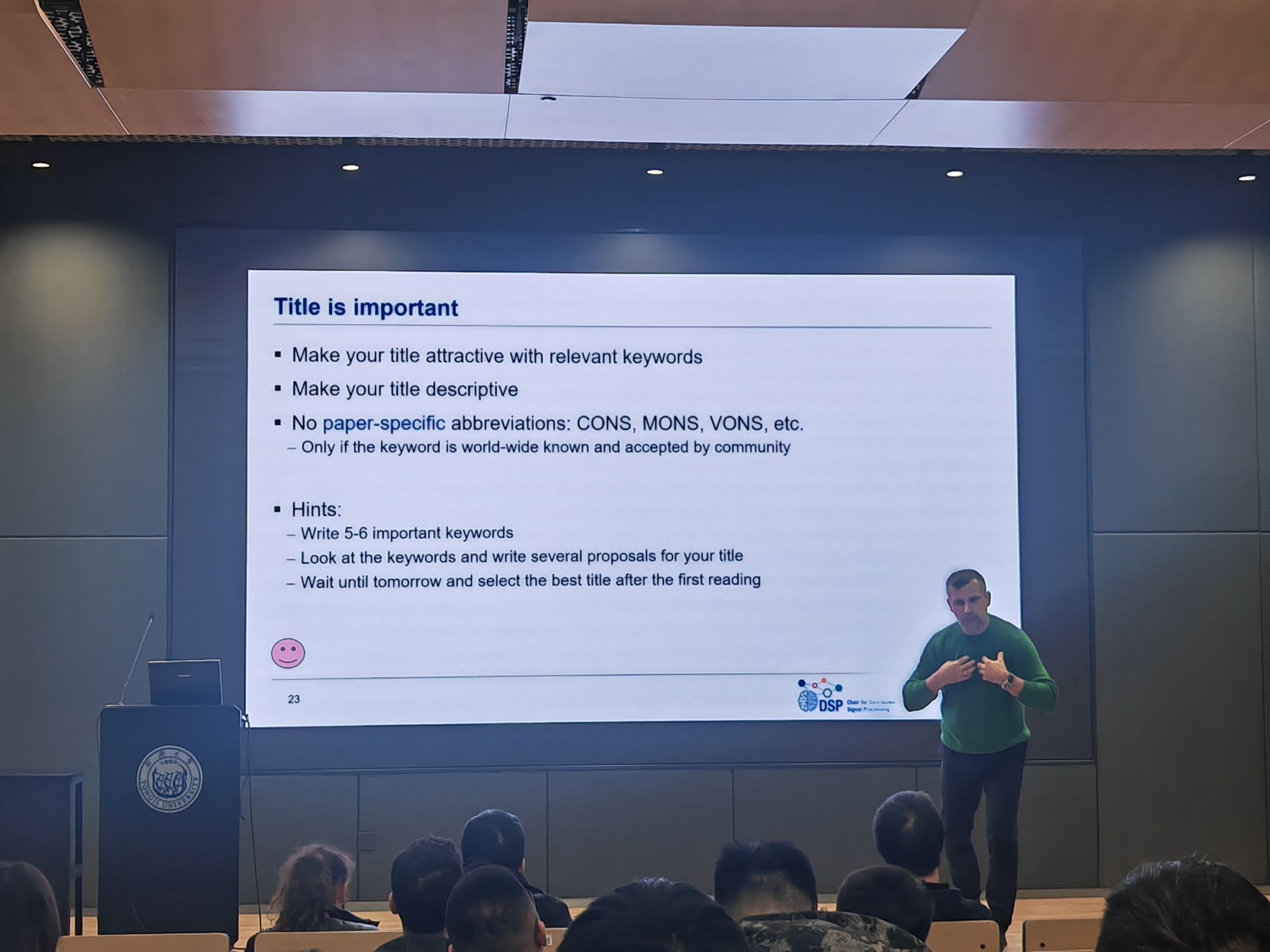
Then, Professor Haris Gacanin focused on the writing skills of each module of the paper. For abstract writing, he proposed to achieve “complete and concise information”, which needs to cover research background, core methods, key findings and application value at the same time; in the introduction section, he emphasized the need to build a clear logical chain, starting from the pain points of the field and gradually transitioning to the necessity and innovation of one’s own research; for the presentation of technical content, he suggested balancing professionalism and readability, reducing the understanding threshold through hierarchical elaboration, and making good use of charts and examples to support arguments to make abstract technical principles easier to perceive. In addition, he sorted out common mistakes in paper writing, such as ambiguous expressions, redundant logic, insufficient elaboration of research significance, and lack of scientific argumentation, and intuitively demonstrated the impact of these problems on paper quality with negative cases, enabling teachers and students present to clearly recognize the importance of language and structural optimization for enhancing paper influence.
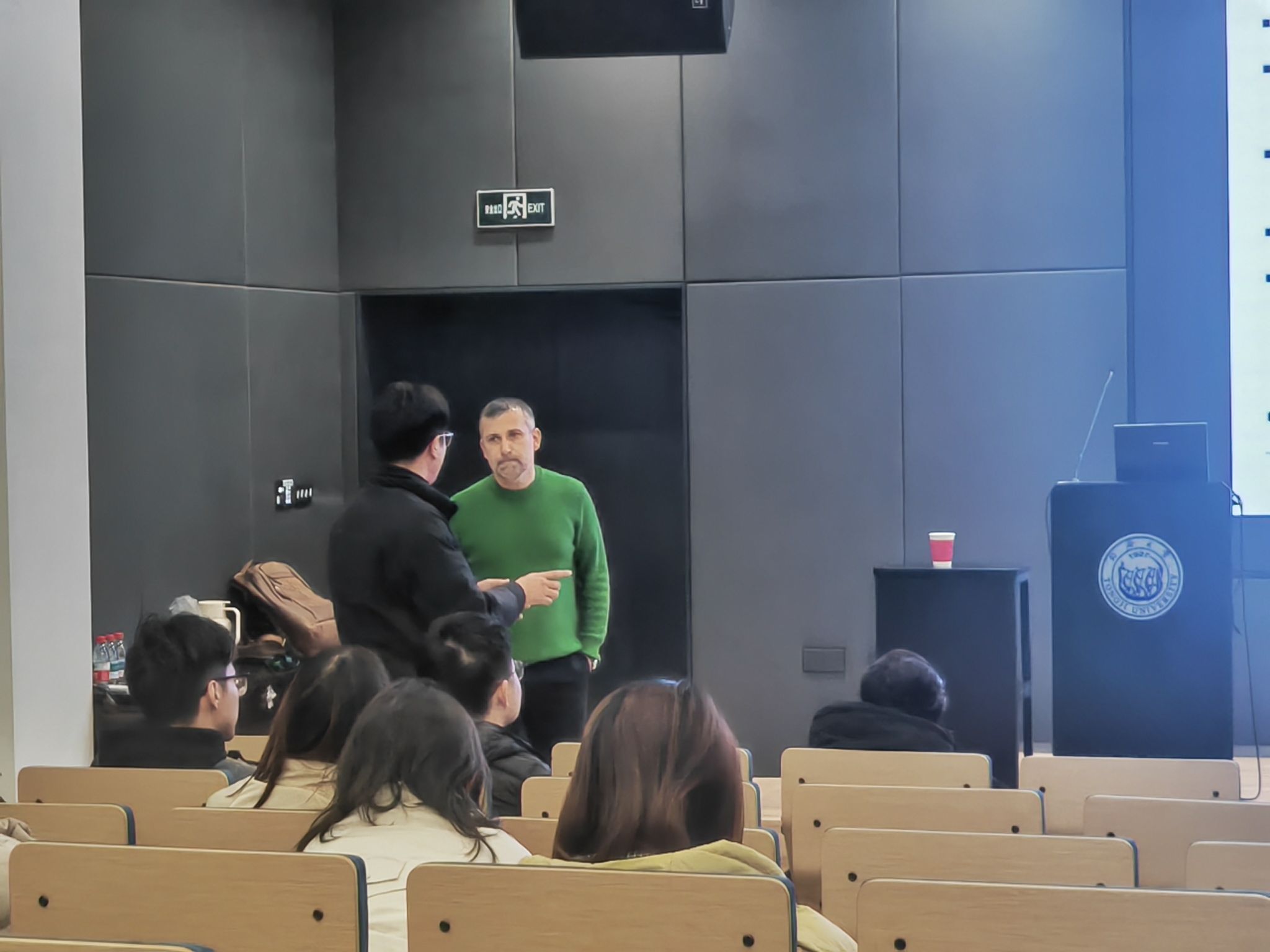
After the report, Prof. Haris Gacanin had cordial exchanges and discussions with the participating teachers and students. Combining his years of experience as an academic editor and researcher, he encouraged the students to attach importance to academic writing as the “communication bridge for scientific research achievements”. He advised them to not only delve deep into technical research in professional fields, but also refine their writing and expression skills, so that high-quality scientific research achievements can be seen by more people. This report further expanded the vision of our teachers and students and deepened their understanding of the basics of academic writing.

