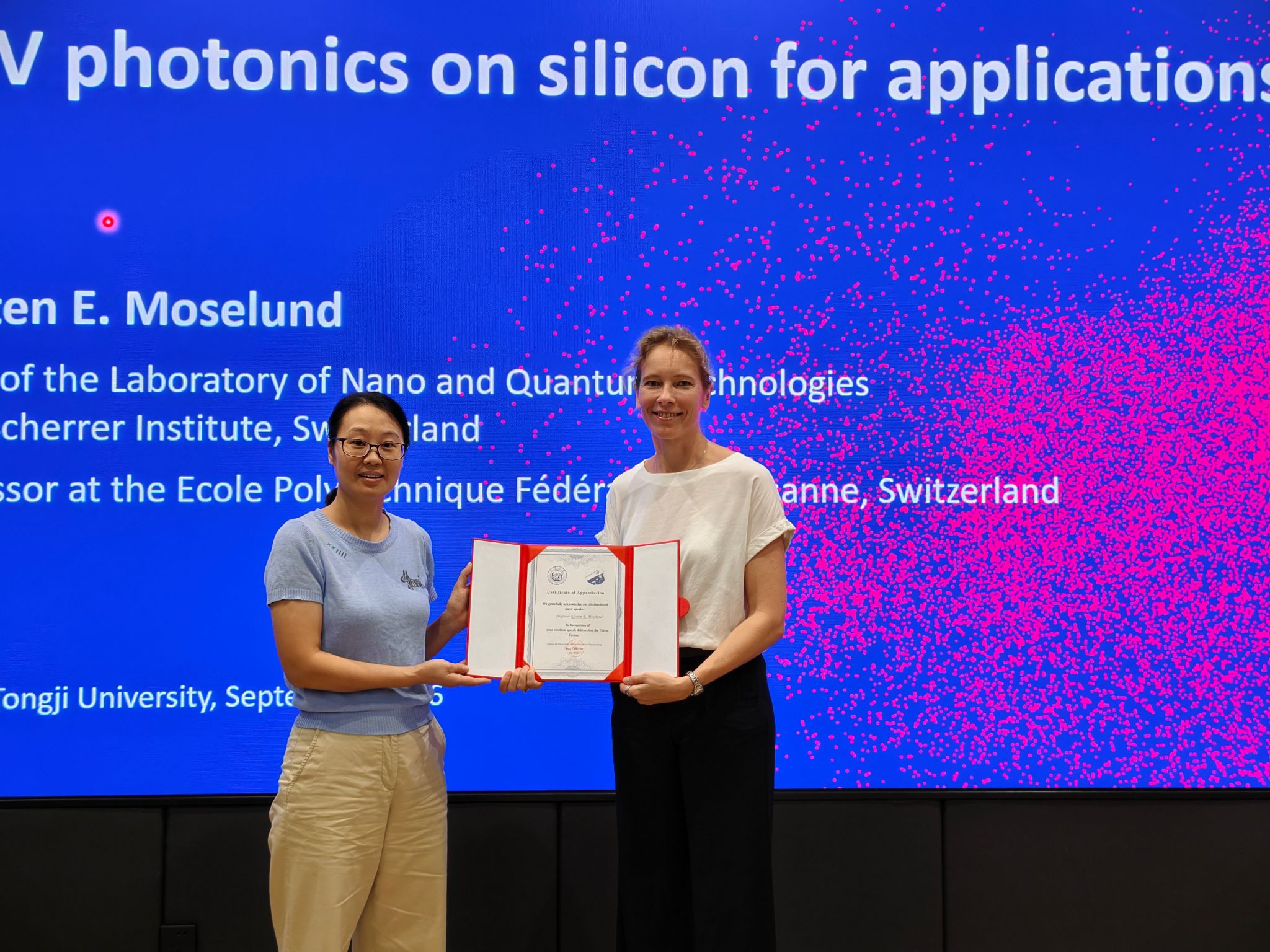
On Sep11, 2026, the 93rdZhi Xin Forum was held in Lecture Hall 117 of the Zhi Xin Building. Prof.KirstenE.MoselundfromÉcole Polytechnique Fédérale de Lausanne, Switzerland, was invited to deliver a talk entitled “III-V photonics on silicon for applications in AI”.
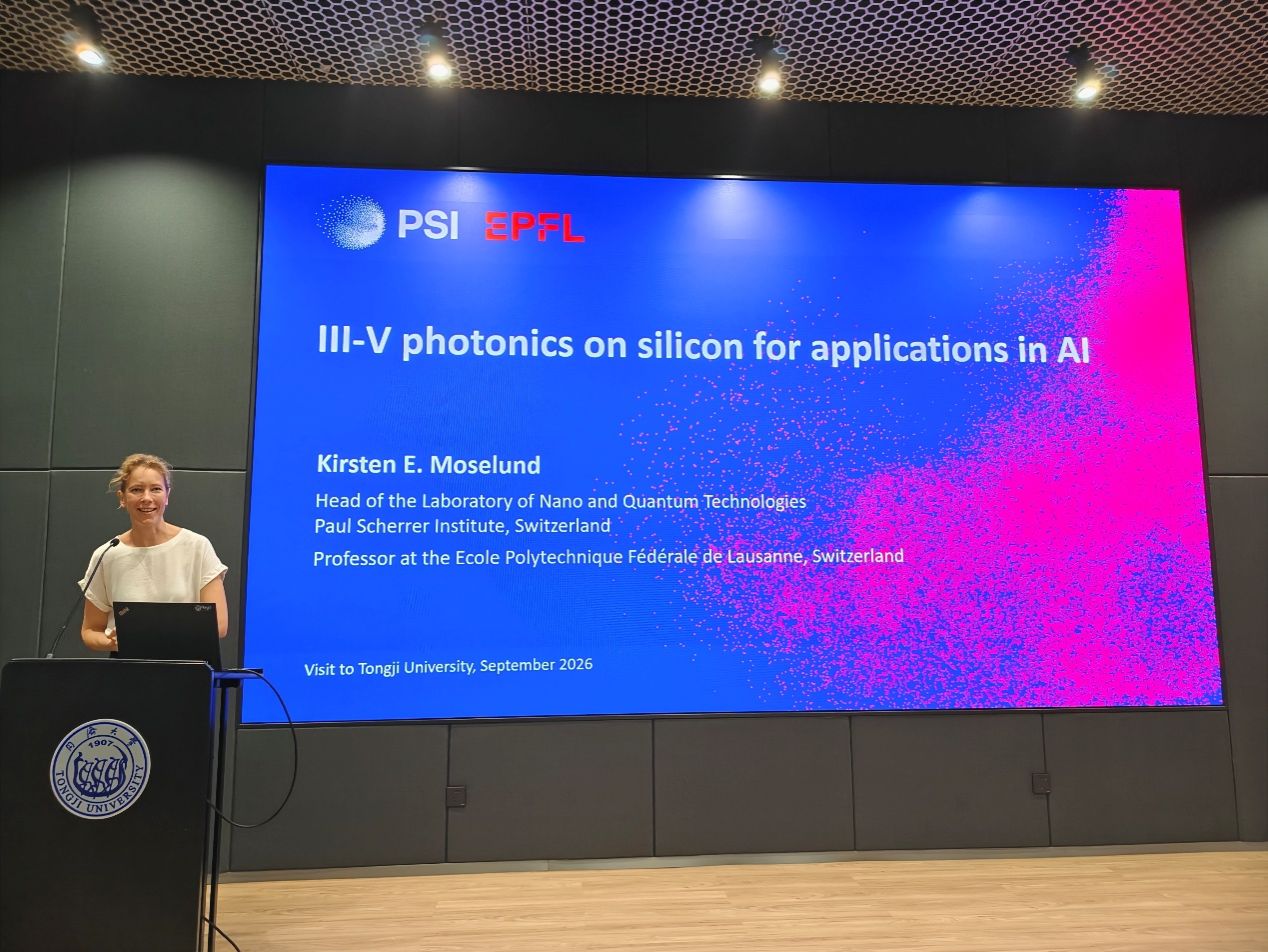
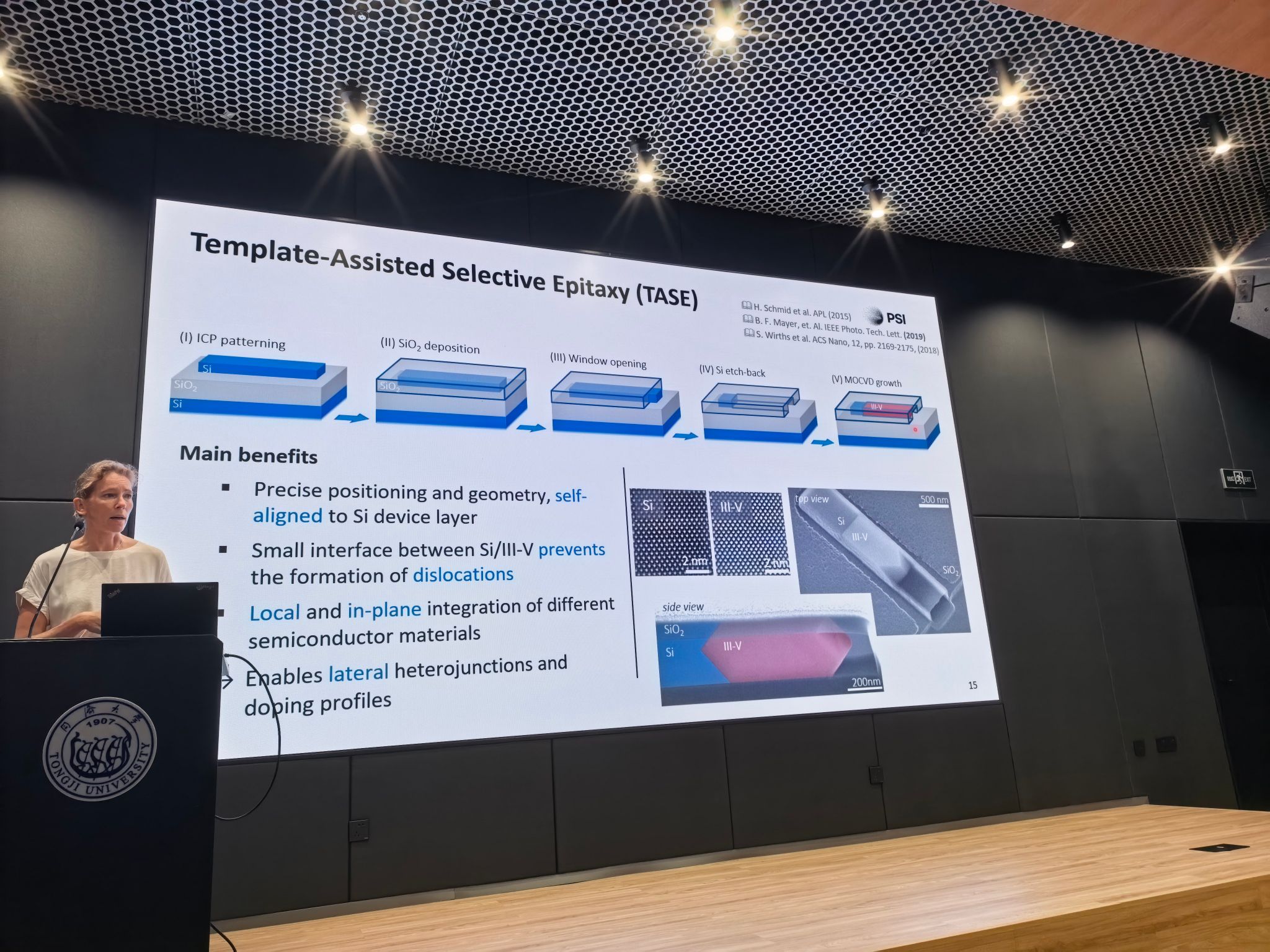
In this talk, Prof. Moselund focused on silicon-integrated III–V photonics for artificial intelligence applications.She elaborated on the fundamental limitations of conventional computing architectures, including memory wall constraints, insufficient bandwidth, and high power consumption. She highlighted the pivotal value of silicon photonic integration technology in overcoming these AI computing bottlenecks. To meet the demands of high-performance and large-scale integration of silicon-based optoelectronic devices, she systematically presented the heterogeneous integration strategies of III-V semiconductors on silicon platforms, with a particular focus on epitaxial growth techniques and their applications in monolithically integrated silicon photonic devices, including high-speed photodetectors, microcavity lasers, and photonic crystal lasers.
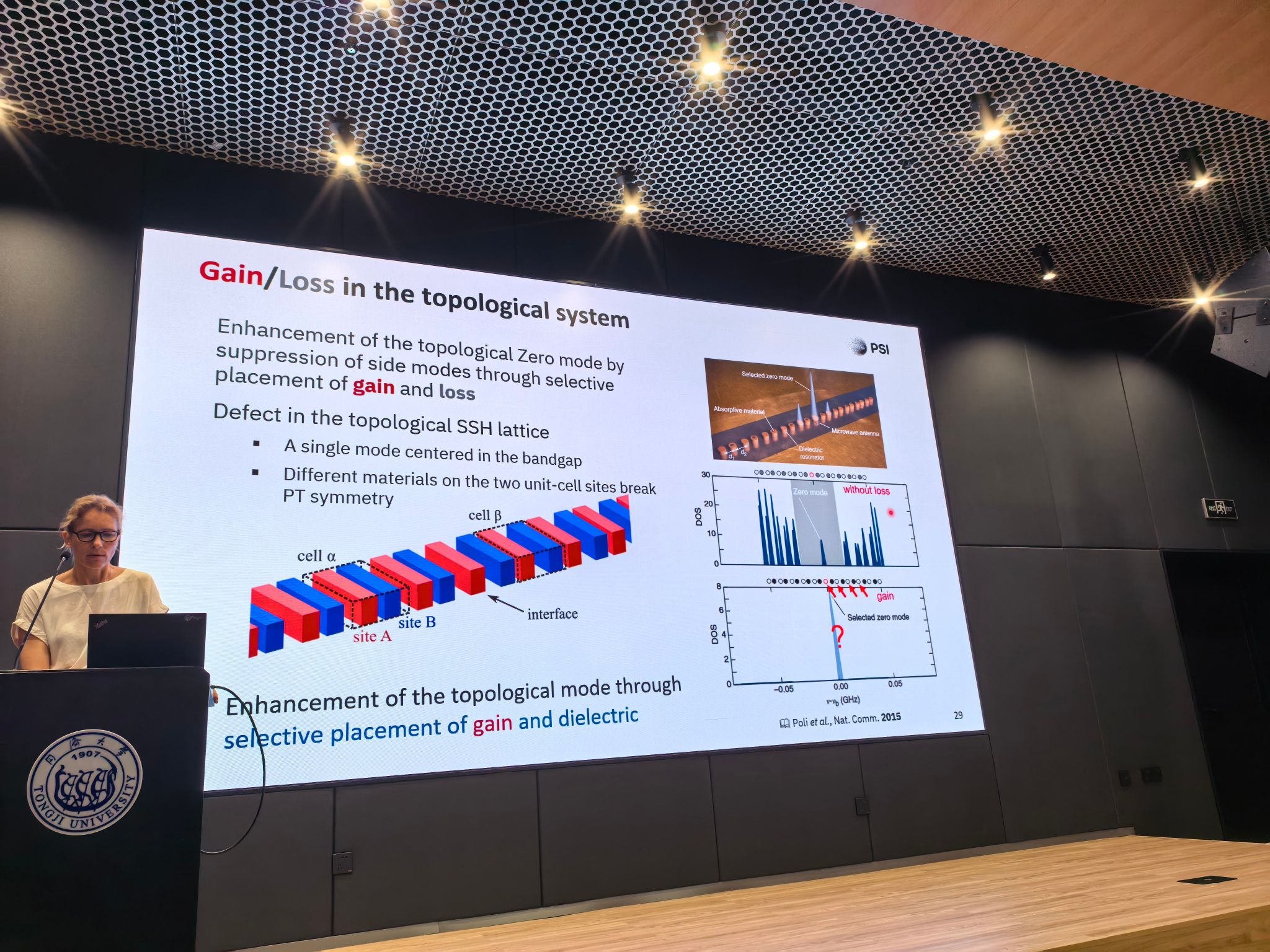
Targeting the requirements of anti-interference capability and high stability for compact on-chip photonic integrated devices, Professor Moselund’s team proposed an optimized implementation scheme for high-performance topological lasers. The presentation thoroughly discussed the mechanisms underlying geometric fine tuning and symmetry breaking in modulating the photonic transmission characteristics of topological edge states. In the field of neuromorphic photonic computing and integrated optoelectronics, she demonstrated the superior performance of random laser networks in image edge detection, image recognition, and medical image processing. The application and scalability of such technologies for low-power, high-throughput photonic computing were further discussed.
After the talk, Prof. Moselund engaged in adetailed discussion andexchange with the attending faculty and students on topics such as the operatingprinciplesof randomlasernetworks,high efficiencypumpingstrategy, and pump lightmodulationusing digital micromirror devices.At the end, she encouraged students toexpandtheiracademichorizons, discover and solve new scientific problems. This talk significantly broadened the perspectives ofbothfaculty and students and deepened their understanding of silicon-integrated III–V photonics and its applications in neuromorphic photonic computing.In addition, it laid a solid foundation for scientific innovation in the interdisciplinary fields of optoelectronic information and artificial intelligence.